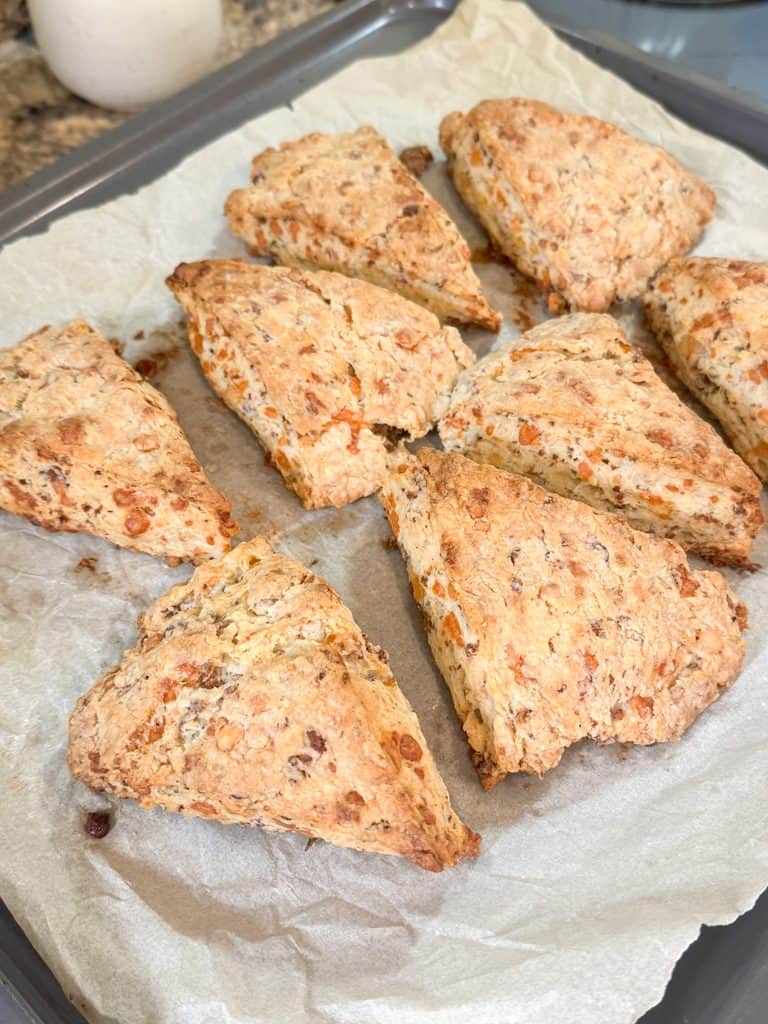
Cheesy Sausage and Rosemary Scones
These cheesy sausage and rosemary scones are tender, flaky, and packed with savory flavor. Each scone is filled with breakfast sausage, grated cheese, and rosemary, making them a hearty choice for breakfast, brunch, or a quick snack.
Although scones are often sweet, savory scones can be just as delicious. This savory scone recipe combines warm rosemary, rich cheddar cheese, and seasoned sausage in a buttery dough. The scones bake until the edges are crisp and golden brown while the centers stay soft and tender.
Serve them warm on their own, or pair them with eggs, soup, salad, or a full country breakfast.
**This post contains affiliate links. We are a participant in the Amazon Services LLC Associates Program, an affiliate advertising program designed to provide a means for us to earn a small commission by linking to Amazon.com and affiliated websites.
Why You’ll Love These Sausage Scones
These sausage scones are easy to make with simple ingredients. You do not need a food processor or any special baking equipment. A pastry cutter, pastry blender, or fork will work perfectly for cutting the cold butter into the flour mixture.
You will also love this recipe because:
- The scones can be prepared ahead of time.
- They are filling enough to serve for breakfast.
- They can be frozen before or after baking.
- The recipe is a great way to use leftover breakfast sausage.
- You can change the cheese and seasonings to create different savory flavors.
These scones are also a perfect treat for a weekend brunch, holiday breakfast, or afternoon snack.
The Secret to Tender, Flaky Scones
The key to making a delicious scone is keeping the butter and dough cold. Cold butter creates small pockets of steam as the scones bake. These pockets give the scones their tender, flaky texture.
Cut the butter into small pieces and work it into the dry ingredients until the mixture looks crumbly. You should still be able to see a few small pieces of butter throughout the flour.
It is also important not to overwork the dough. Too much mixing can change the structure of the dough and make the finished scones tough. Mix only until the ingredients hold together.
If the dough feels too dry, add another tablespoon of heavy cream. The mixture should hold its shape without becoming a wet dough.
Choosing the Best Cheese
White cheddar or parmesan cheese works especially well in this recipe. Sharp cheddar adds a rich flavor that pairs perfectly with the breakfast sausage and rosemary.
I found a white cheddar and parmesan cheese block at Aldi, and it was phenomenal in these scones. If you cannot find a similar blend, you can use:
- White cheddar cheese
- Sharp cheddar
- Parmesan cheese
- A mixture of cheddar and parmesan
- Smoked cheddar
- Pepper Jack cheese
- Goat cheese
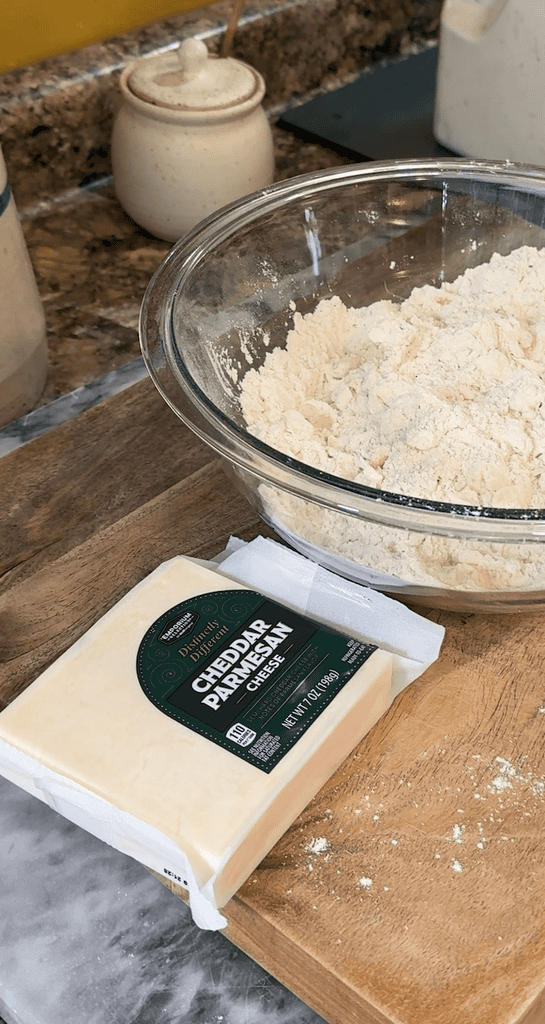
For the best texture, grate the cheese from a block. Freshly grated cheese usually melts better than packaged shredded cheese.
Low-fat cheese may be used, but full-fat cheese will give the sausage scones a richer flavor and softer texture.
Fresh Rosemary Versus Dried Rosemary
This recipe uses both fresh rosemary and dried rosemary.
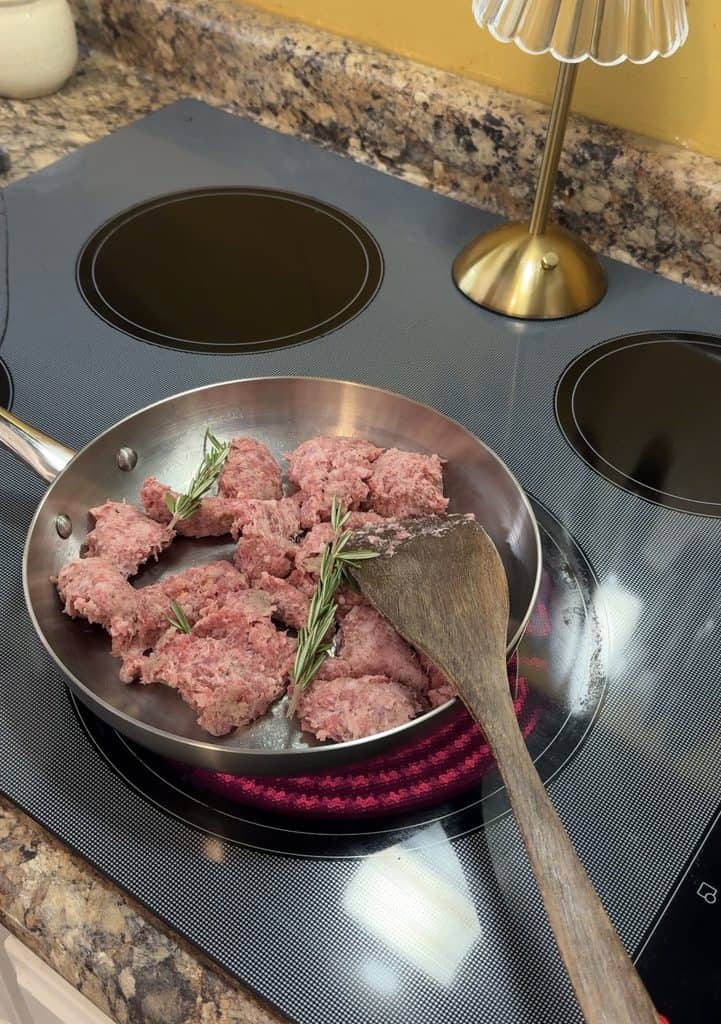
Fresh rosemary sprigs are added to the sausage while it cooks. Adding fresh rosemary sprigs to the sausage while it cooks is optional, but it gives the meat an extra layer of rosemary flavor. If you use them, remove the sprigs before chilling the cooked sausage.Dried rosemary is added directly to the flour mixture. If the pieces are large, gently crush them between your fingers before adding them. This helps distribute the rosemary flavor throughout the dough.
Rosemary has a strong flavor, so a little goes a long way.
Ingredients for Cheesy Sausage and Rosemary Scones
Breakfast sausage
You only need one cup of cooked sausage for the scones. I browned an entire pound of sausage with the rosemary and saved the remaining sausage for another recipe.
Regular, mild, or hot breakfast sausage will work. You could also substitute Italian sausage or other seasoned pork sausages if desired.
All-purpose flour
All-purpose flour gives the scones enough structure while keeping them tender.
Baking powder
One tablespoon of baking powder helps the scones rise in the oven.
Salt and black pepper
Salt brings out the savory flavors of the sausage and cheese. Add black pepper to taste.
Rosemary
Fresh rosemary flavors the sausage as it cooks, while dried rosemary is mixed into the dough.
Cold butter
Use one stick (1/2 cup) of cold butter cut into small cubes. Keep the butter refrigerated until you are ready to add it to the flour.
Do not use melted butter. Melted butter will mix completely into the flour and will not create the same flaky texture.
Cheese
White cheddar, sharp cheddar, parmesan cheese, or a combination of cheddar and parmesan works well.
Heavy cream
Heavy cream adds moisture and richness. You may need one extra tablespoon if your dough is too dry to hold together.
How to Make Cheesy Sausage and Rosemary Scones
1. Cook the sausage
Place one pound of breakfast sausage in a large skillet over medium heat. Add two fresh rosemary sprigs.
Cook the sausage, breaking it into small pieces with a wooden spoon, until it is completely browned. Drain away the grease and remove the rosemary sprigs.
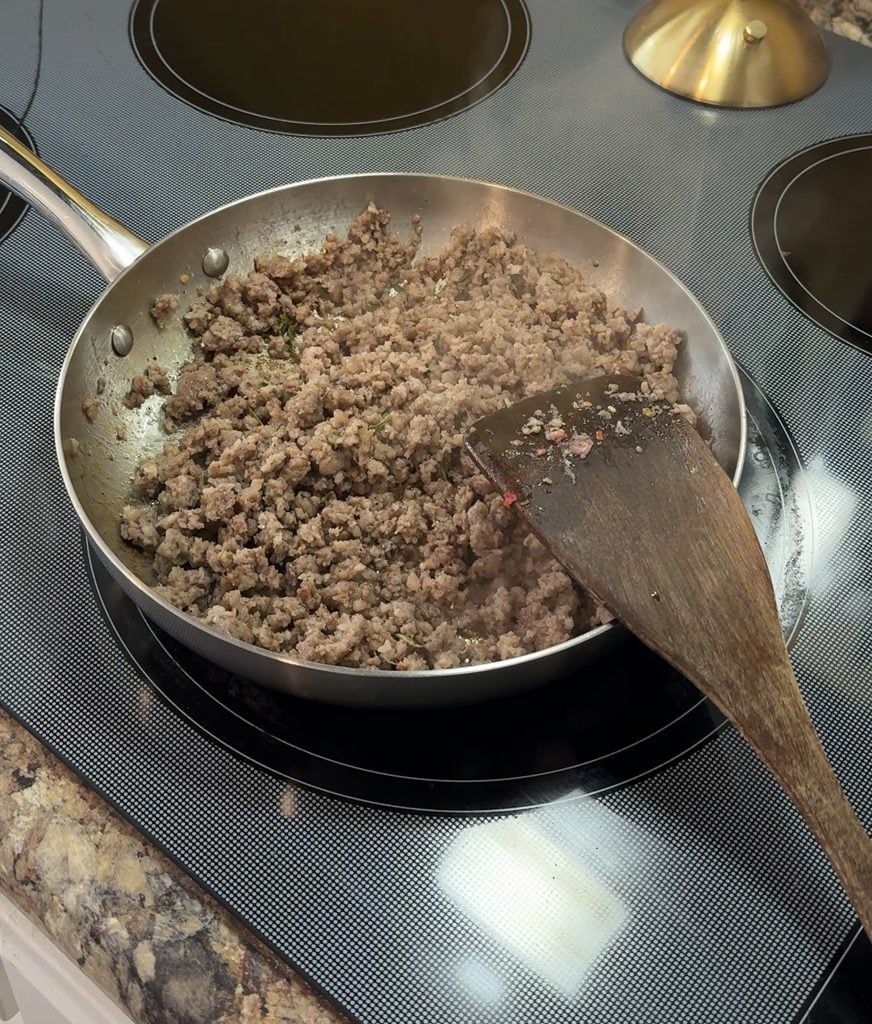
Measure one cup of cooked sausage for the scones. Place it in the refrigerator to cool. Use the remaining sausage in another dish.
Do not add hot or room temperature sausage to the dough. Warm sausage can soften the butter before the scones reach the oven.
2. Combine the dry ingredients
In a large mixing bowl, combine flour, baking powder, salt, dried rosemary, and black pepper.
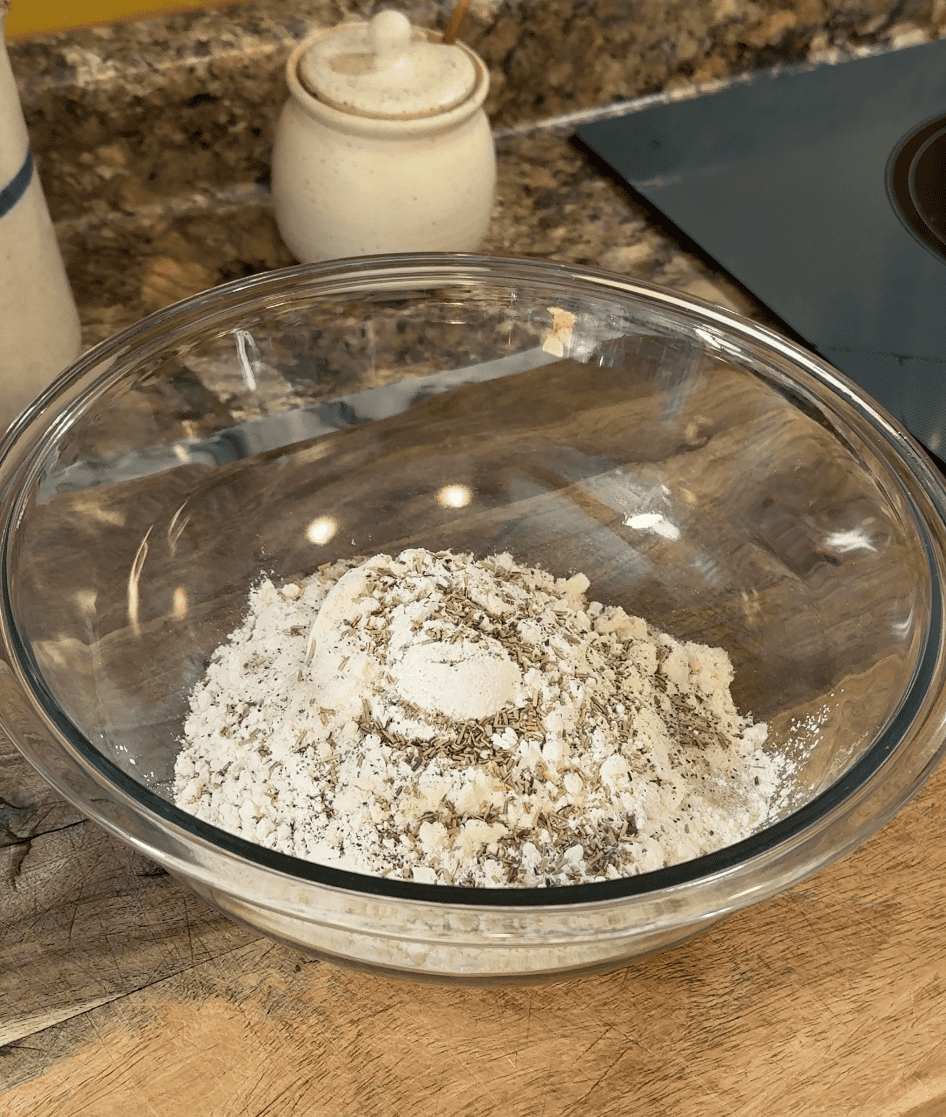
Whisk the dry ingredients until they are evenly mixed.
3. Cut in the cold butter
Cut one stick of cold butter into small cubes and add it to the flour mixture.
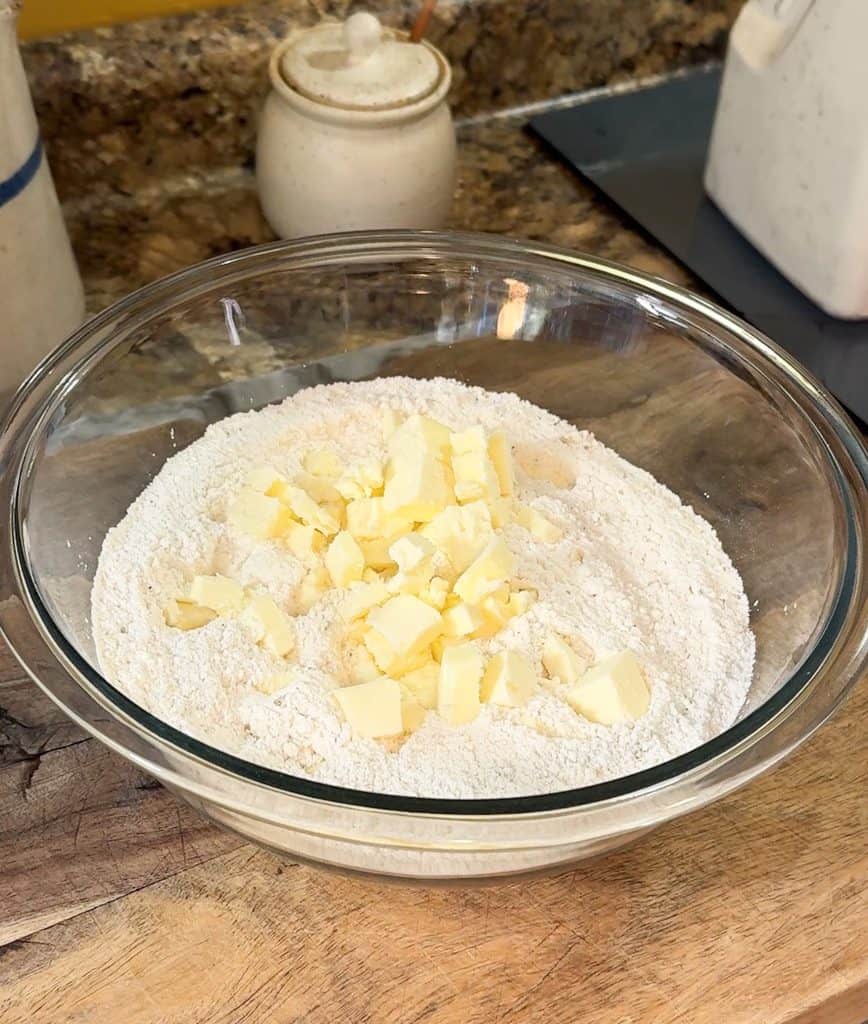
Use a pastry cutter, pastry blender, or fork to work the butter into the flour. Continue until the mixture has a coarse, crumbly texture.
You can also use your hands, but work quickly so the warmth from your fingers does not melt the butter.
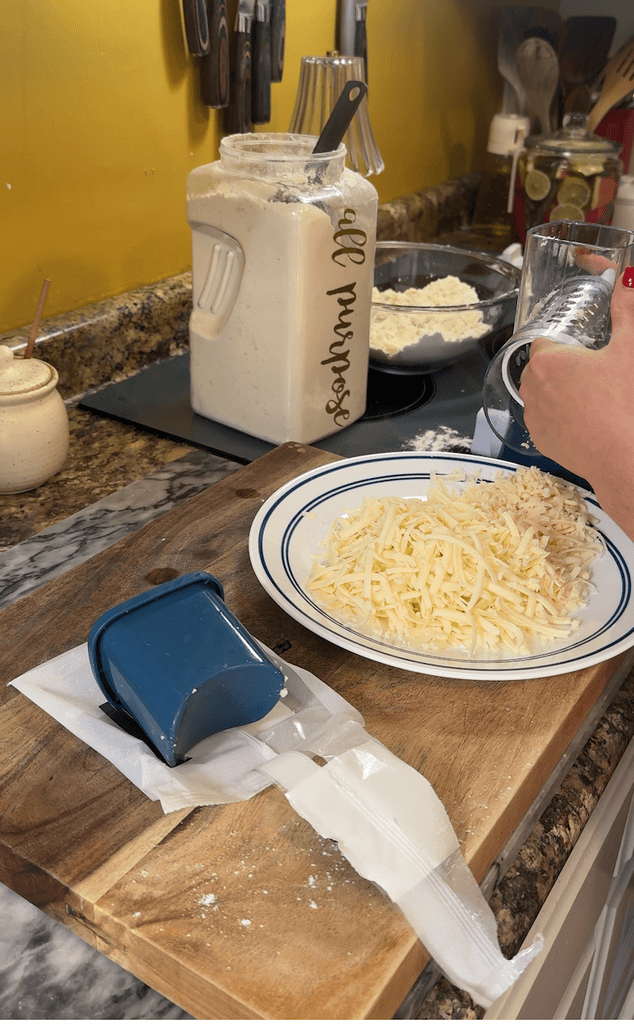
4. Add the cheese and sausage
Add the grated cheese and one cup of chilled cooked sausage to the large bowl.
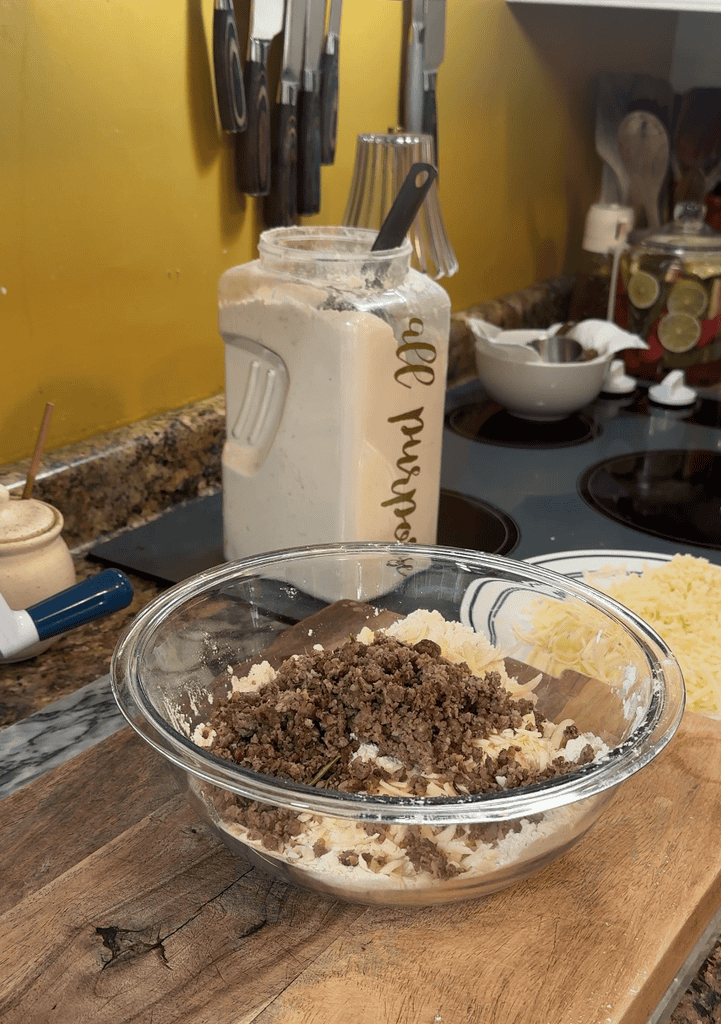
Stir until the cheese and sausage are evenly coated in the flour mixture.
5. Add the heavy cream
Pour one cup of heavy cream into the bowl. Mix gently until a dough begins to form.
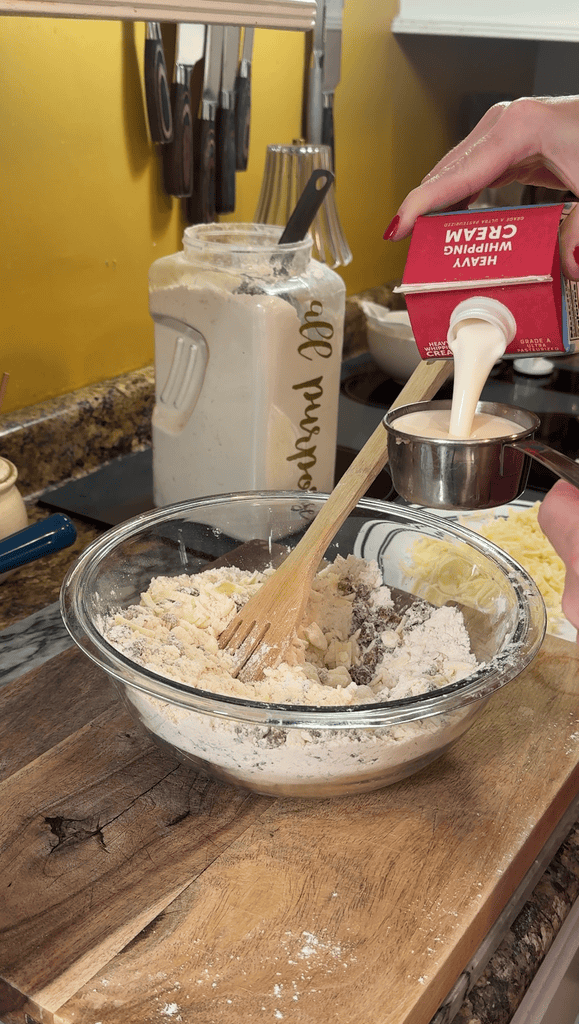
At this point, it may be easiest to mix the dough with your hands. If the mixture is too dry and will not hold together, add one additional tablespoon of heavy cream.
Do not add too much cream. The dough should stick together, but it should not feel overly wet or sticky.
6. Shape the dough
Line a pie dish with parchment paper. Press the dough evenly into the dish to form a thick circle.
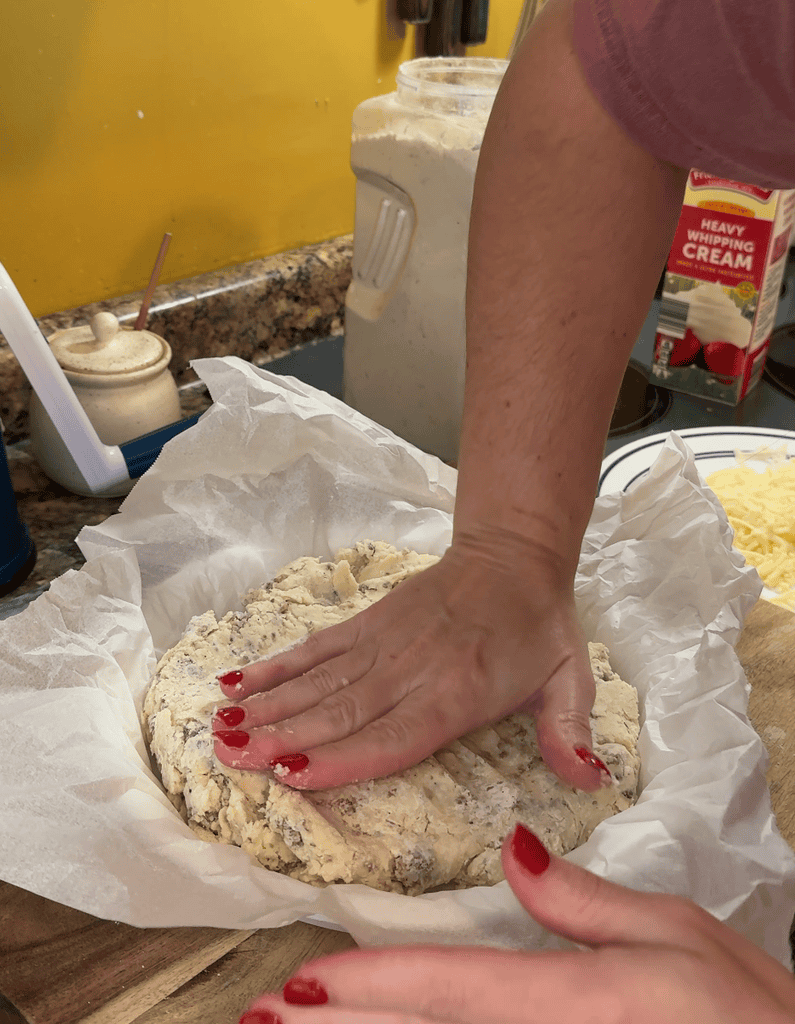
Using a pie dish makes it easy to create a uniform circle without transferring the dough to a floured work surface. If you do not have a pie dish, shape the dough by hand on a lightly floured surface. Use only a bit of flour to prevent sticking.
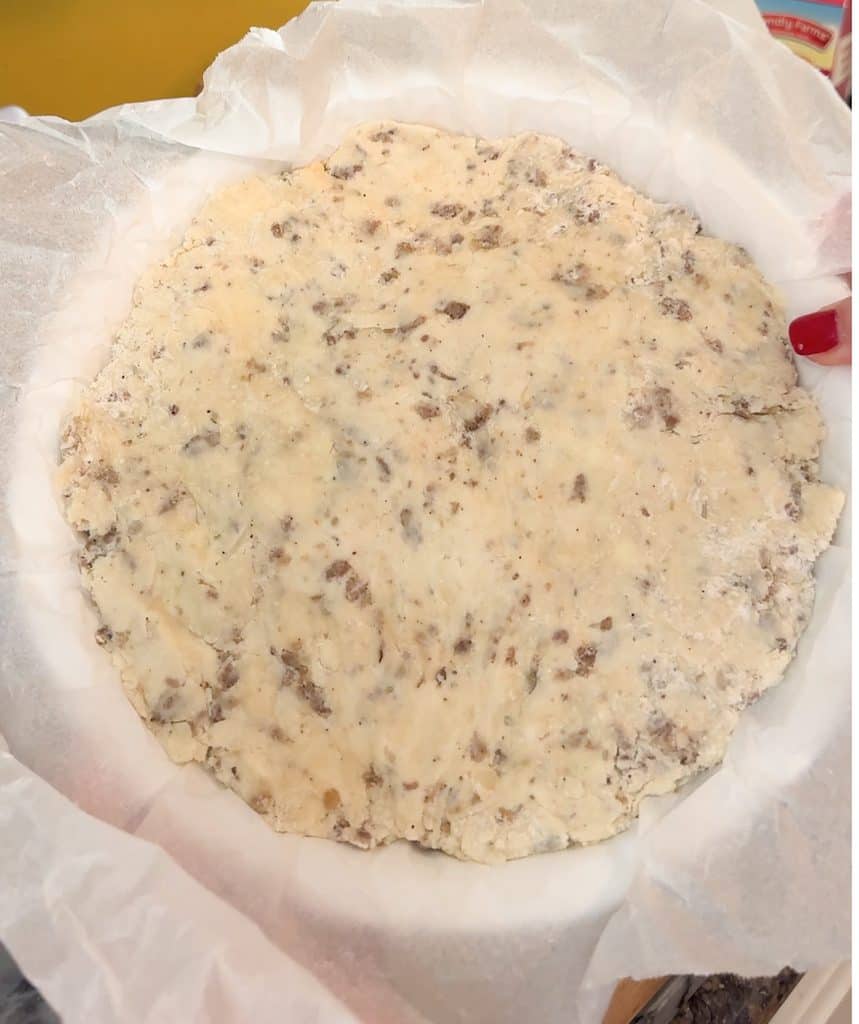
7. Freeze the dough
Place the pie dish in the freezer for 30 minutes.
Do not skip this step. Chilling the shaped dough helps keep the butter from melting too quickly in the oven. This creates taller, flakier scones.
8. Cut the scones
Preheat the oven to 400°F. Line a baking sheet with parchment paper.
Remove the chilled dough from the freezer. Lift it from the pie dish using the parchment paper.
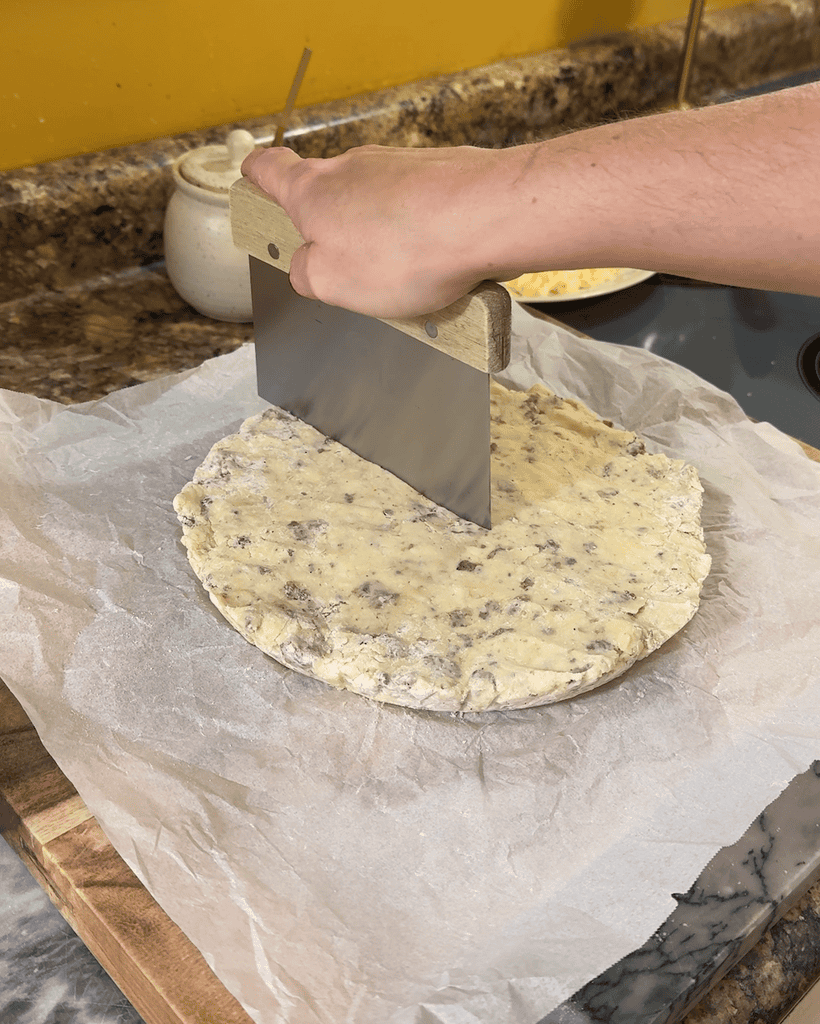
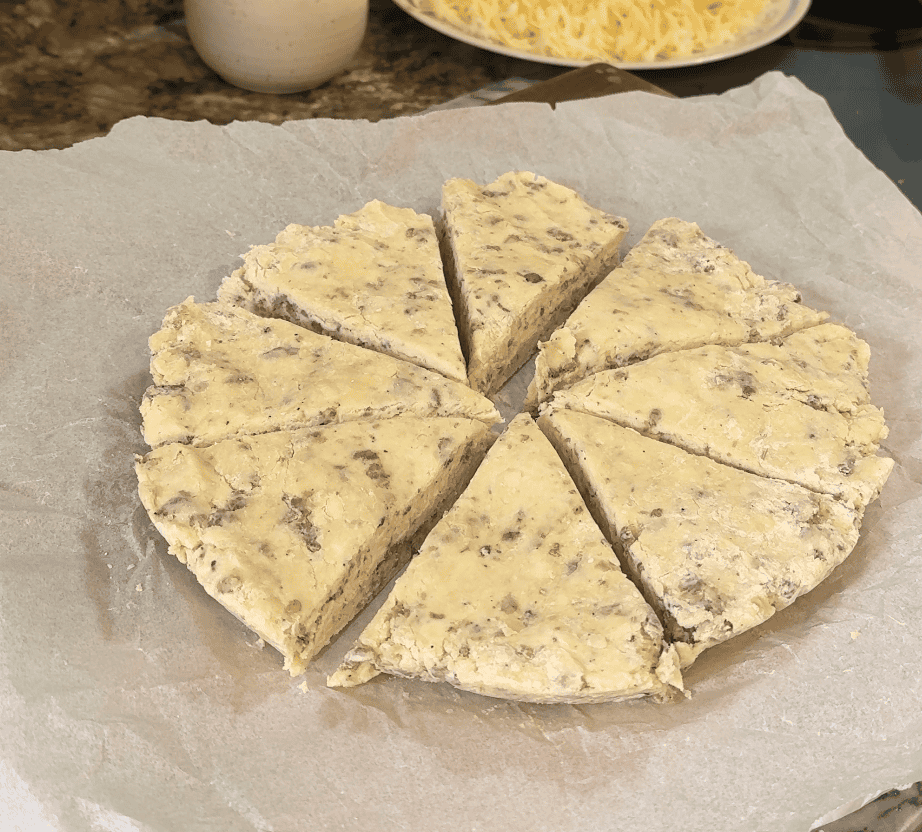
Use a sharp knife or a bench scraper to cut the circle into eight equal pieces.
9. Bake until golden brown
Arrange the wedges on the lined baking sheet, leaving space between each one.
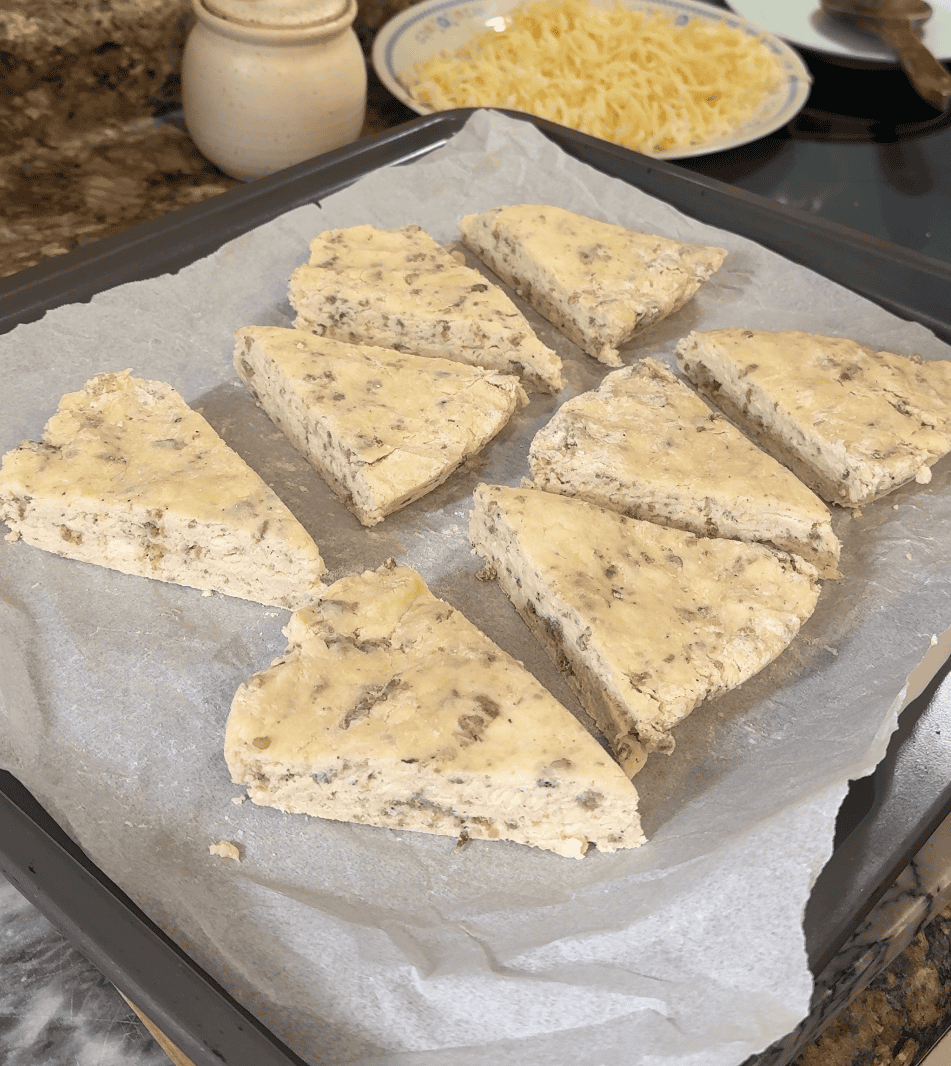
Bake at 400°F for approximately 30 minutes, or until the tops of the scones and the edges are golden brown. Oven temperatures can vary, so begin watching them closely near the end of the baking time.
Transfer the baked scones to a cooling rack. They are best enjoyed while warm.
Tips for Making the Best Savory Scones
Keep everything cold
Cold ingredients are important when making scones. Chill the sausage completely before adding it to the dough, and keep the butter cold until you are ready to use it.
Do not overmix
Mix the dough only until it holds together. Overworking the flour can make the scones dense or tough.
Drain the sausage well
Too much grease can make the dough heavy. Drain the sausage thoroughly after cooking it.
Give the scones room to bake
Spread the wedges out on the baking tray or cookie sheet. Leaving space between them allows the edges to become crisp and golden brown.
Cut the scones evenly
Cutting the dough into equal pieces helps the scones bake at the same rate. If some wedges are much smaller than others, they may brown too quickly.
Recipe Variations
Once you have made the original recipe, try one of these variations the next time:
Spicy sausage and cheddar scones
Use hot breakfast sausage, sharp cheddar, and a pinch of crushed red pepper.
Garlic and parmesan sausage scones
Use parmesan cheese and add 1/2 teaspoon of garlic powder to the dry ingredients.
Italian sausage scones
Replace the breakfast sausage with cooked Italian sausage. Add parmesan cheese and an extra pinch of dried rosemary.
Sausage and goat cheese scones
Replace part of the cheddar cheese with crumbled goat cheese for a tangy flavor.
Herbed cheddar scones
Leave out the sausage and add more grated cheese and a mixture of fresh herbs for simple cheddar scones.
Sweet scone ingredients such as brown sugar, lemon zest, and lemon juice are not needed for this savory version.
What to Serve With Sausage Scones
These scones are hearty enough to enjoy on their own, but they also pair well with:
- Scrambled or fried eggs
- Fresh fruit
- Tomato soup
- Potato soup
- A green salad
- Sausage gravy
- Butter or herb butter
- Hot coffee or tea
You can also split a warm scone in half and add a thick slice of cheese for an extra-rich breakfast.
How to Store Sausage Scones
Allow the scones to cool before storing them. Place them in an airtight container and refrigerate for up to four days.
Because these scones contain cooked sausage and cheese, they should not be left at room temperature for extended periods.
Reheat the scones in a 350°F oven for about 8 to 10 minutes. You can also warm an individual scone in the microwave, although the outside will not be as crisp.
Can You Freeze Sausage Scones?
Yes. These savory scones freeze well before or after baking.
To freeze unbaked scones, cut the chilled dough into eight wedges. Place the pieces on a parchment-lined baking sheet and freeze until firm. Transfer them to a freezer-safe container or bag.
Bake the frozen scones without thawing. They may need a few additional minutes in the oven.
To freeze baked scones, allow them to cool completely before placing them in an airtight container. Freeze for up to three months. Thaw them in the refrigerator before reheating.
Frequently Asked Questions
Why did my scones turn out tough?
The dough may have been mixed or handled too much. Mix only until the ingredients stick together. Keeping the butter, sausage, and dough cold will also help create a tender texture.
Can I use milk instead of heavy cream?
Heavy cream gives these scones their rich flavor and soft texture. Whole milk may work, but the finished scones may be less tender. Start with less milk because it is thinner than cream.
Can I use a food processor?
You can use a food processor to cut the cold butter into the dry ingredients, but it is easy to overmix. Pulse the mixture only a few times, then transfer it to a large bowl before adding the sausage, cheese, and cream.
Why do I need to freeze the dough?
Freezing the dough for 30 minutes firms the butter. When the cold butter reaches the hot oven, it releases steam and helps create flaky layers.
Can I brush the tops before baking?
Yes. Use a pastry brush to lightly coat the tops of the scones with heavy cream. You can also sprinkle a little grated cheese on top before baking.
Final Thoughts
These cheesy sausage and rosemary scones turn simple breakfast ingredients into a warm, filling meal. The combination of flaky dough, savory sausage, sharp cheese, and rosemary makes them perfect for breakfast, brunch, or serving alongside soup.
The most important steps are using cold butter, chilling the cooked sausage, freezing the shaped dough, and avoiding overmixing. Follow those tips, and you will have tender, golden brown scones filled with savory flavors in every bite.

Cheesy Sausage and Rosemary Scones
Equipment
- large skillet
- wooden spoon
- large mixing bowl
- whisk
- Pastry cutter, pastry blender, or fork
- Pie dish
- parchment paper
- sharp knife
- baking sheet
- cooling rack
Ingredients
- 1 cup cooked breakfast sausage
- 2 sprigs fresh rosemary
- 2 cups all-purpose flour
- 1 tablespoon baking powder
- 1 teaspoon salt
- Black pepper to taste
- 1 teaspoon dried rosemary
- 1/2 cup cold butter cut into small cubes
- 1/2 cup grated white cheddar parmesan, or a combination
- 1 cup heavy cream
- 1 additional tablespoon heavy cream if needed
Instructions
- Add the breakfast sausage and fresh rosemary sprigs to a large skillet.
- Cook over medium heat, breaking the sausage into small pieces, until it is browned and fully cooked.
- Remove the rosemary sprigs and drain away the grease.
- Measure one cup of cooked sausage and place it in the refrigerator to cool. Save the remaining sausage for another recipe.
- In a large mixing bowl, combine flour, baking powder, salt, dried rosemary, and black pepper.
- Add the cubed cold butter to the flour mixture.
- Use a pastry cutter, fork, or your hands to work the butter into the flour until the mixture has a coarse, crumbly texture.
- Add the grated cheese and one cup of chilled cooked sausage. Mix until evenly combined.
- Pour in one cup of heavy cream and gently mix until the dough holds together.
- If the dough is too dry, add one additional tablespoon of heavy cream. Do not overmix.
- Line a pie dish with parchment paper and press the dough evenly into the dish to form a thick circle.
- Place the dough in the freezer for 30 minutes.
- Preheat the oven to 400°F and line a baking sheet with parchment paper.
- Remove the dough from the freezer and lift it from the pie dish.
- Use a sharp knife to cut the dough into eight equal wedges.
- Arrange the wedges on the prepared baking sheet with space between them.
- Bake for approximately 30 minutes, or until the scones are golden brown.
- Transfer the scones to a cooling rack and enjoy them warm.