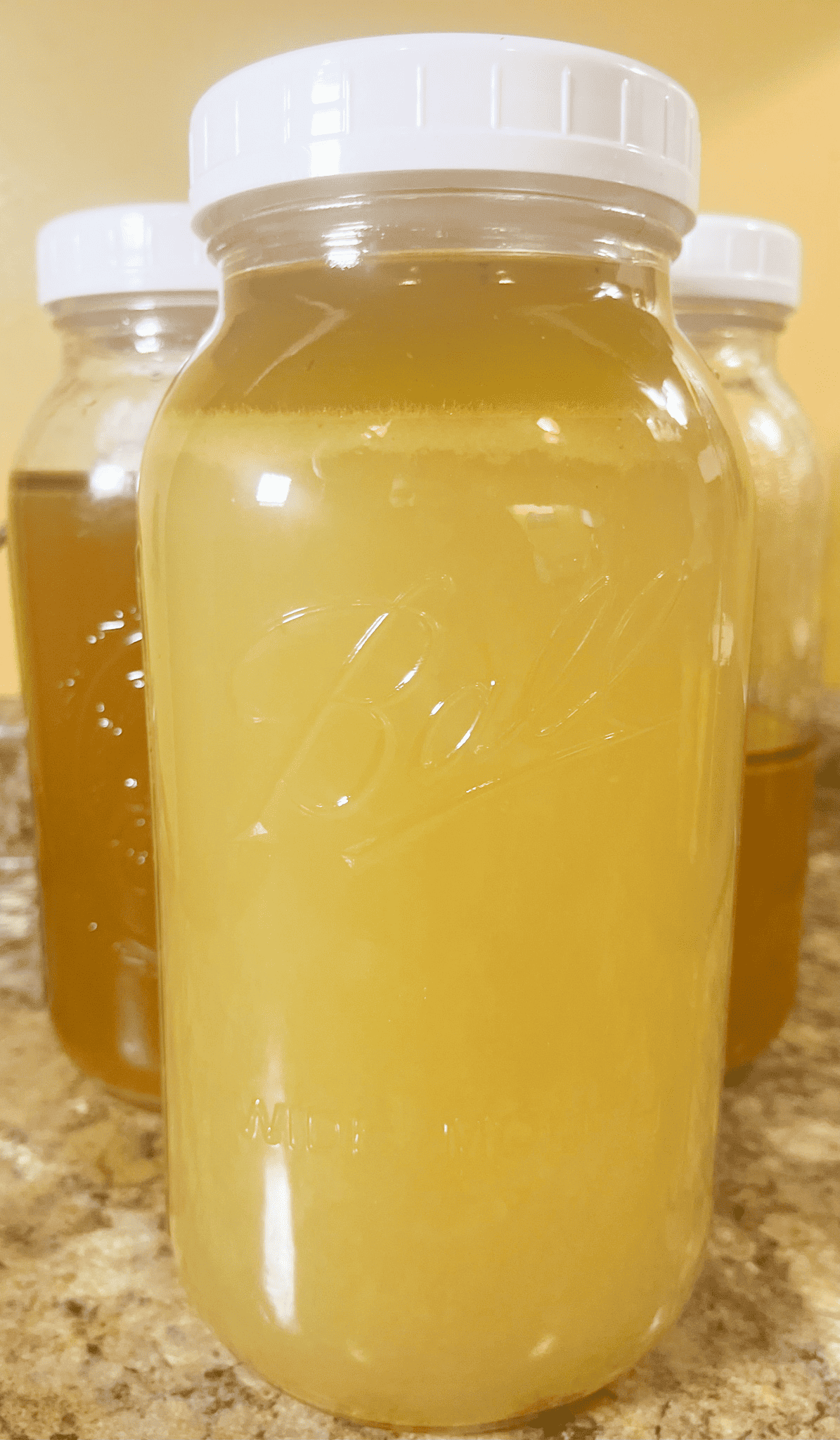
Natural DIY Wood Cleaner and Polish
This Natural DIY Wood Cleaner and Polish is one of my favorite homemade cleaning products because it uses simple ingredients you can find at almost any grocery store. If you’re looking for a natural cleaner that helps clean wood, restore wood shine, and avoid the harmful chemicals often found in commercial furniture polish sprays, this simple recipe is a great option.
Many commercial products contain synthetic fragrances, aerosol fumes, and toxic chemicals that you may not want on your wooden furniture. Making your own natural furniture polish recipe gives you complete control over the natural ingredients that come into contact with your wood surface. With just distilled white vinegar, olive oil, and your favorite essential oils, you can create a natural homemade polish in just a few minutes.
**This post contains affiliate links. We are a participant in the Amazon Services LLC Associates Program, an affiliate advertising program designed to provide a means for us to earn a small commission by linking to Amazon.com and affiliated websites.
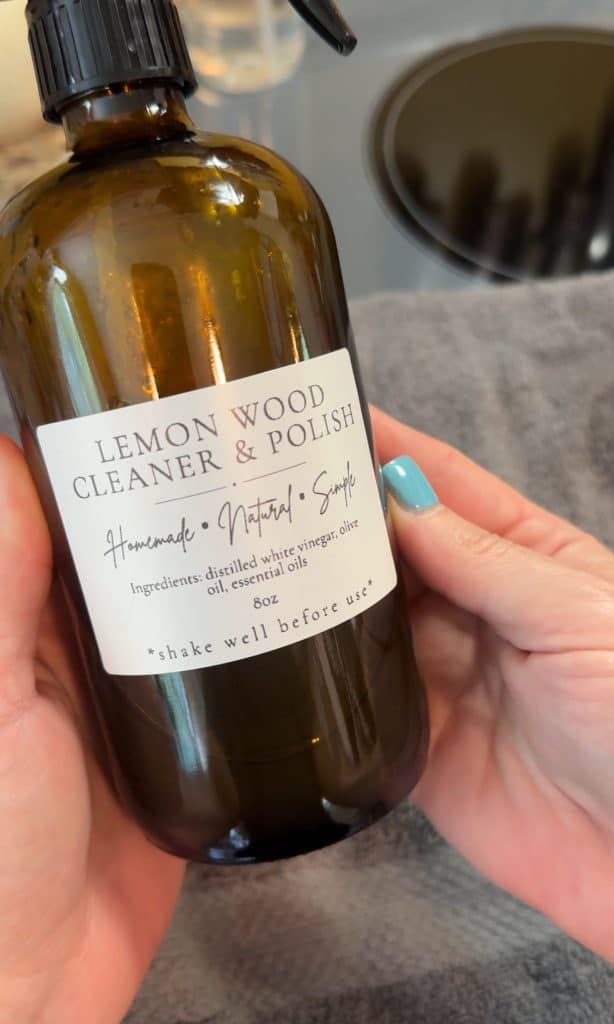
Why Make Your Own Natural Furniture Polish?
Making your own homemade wood polish is a great way to reduce your reliance on commercial furniture polishes while saving money. This DIY furniture polish works well on most sealed wooden furniture and can help remove dust, fingerprints, and everyday buildup.
Unlike commercial polishes that may leave behind residue, this natural wood polish uses simple ingredients to clean wood and add a beautiful shine to the wood’s surface.
Whether you’re cleaning a kitchen cabinet, dining table, bookshelf, or other wooden furniture, this DIY wood polish recipe is easy to make in small batches whenever you need it.
Ingredients for Natural DIY Wood Cleaner and Polish
- 1/2 cup distilled white vinegar
- 1/2 cup olive oil
- 15–20 drops essential oils of choice
Best Essential Oils for Wood Polish
Lemon essential oil is one of the most popular choices because it leaves behind a fresh scent while complementing the cleaning power of vinegar. Other excellent options include:
- Orange essential oil
- Lemon oil
- Sweet birch essential oil
- Cedarwood
- Pine
These essential oils provide a pleasant scent without the synthetic fragrances commonly found in commercial furniture polish sprays.
Equipment Needed
- 8-ounce glass spray bottle
- Funnel (optional)
- Microfiber cloth or soft cloth
How to Make Homemade Wood Polish
One of the best things about this DIY wood polish recipe is how simple it is to make. With just a few natural ingredients and a spray bottle, you’ll have your own homemade furniture polish ready in minutes.
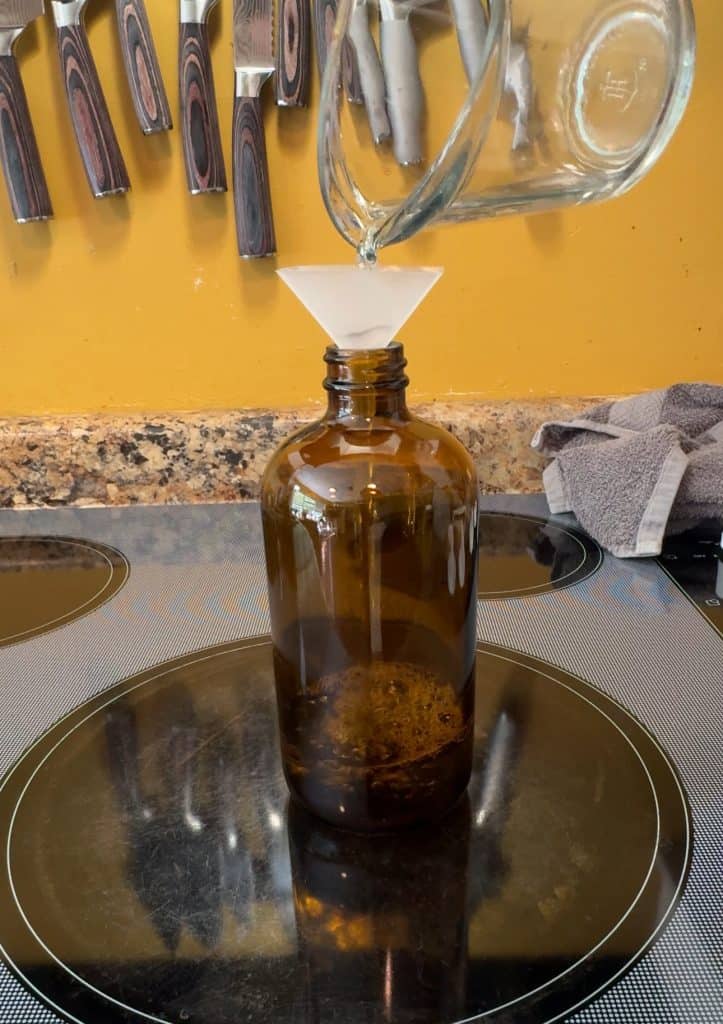
Add the Distilled White Vinegar
The first step is to pour 1/2 cup of distilled white vinegar into an 8-ounce glass spray bottle. Distilled white vinegar is a popular ingredient in homemade cleaning products because it helps break down dust, fingerprints, and light buildup on a wood surface without relying on harsh chemicals.
If you don’t have distilled white vinegar, apple cider vinegar can work in a pinch, but distilled white vinegar is generally preferred because it has a milder scent and won’t affect the appearance of your wooden furniture.
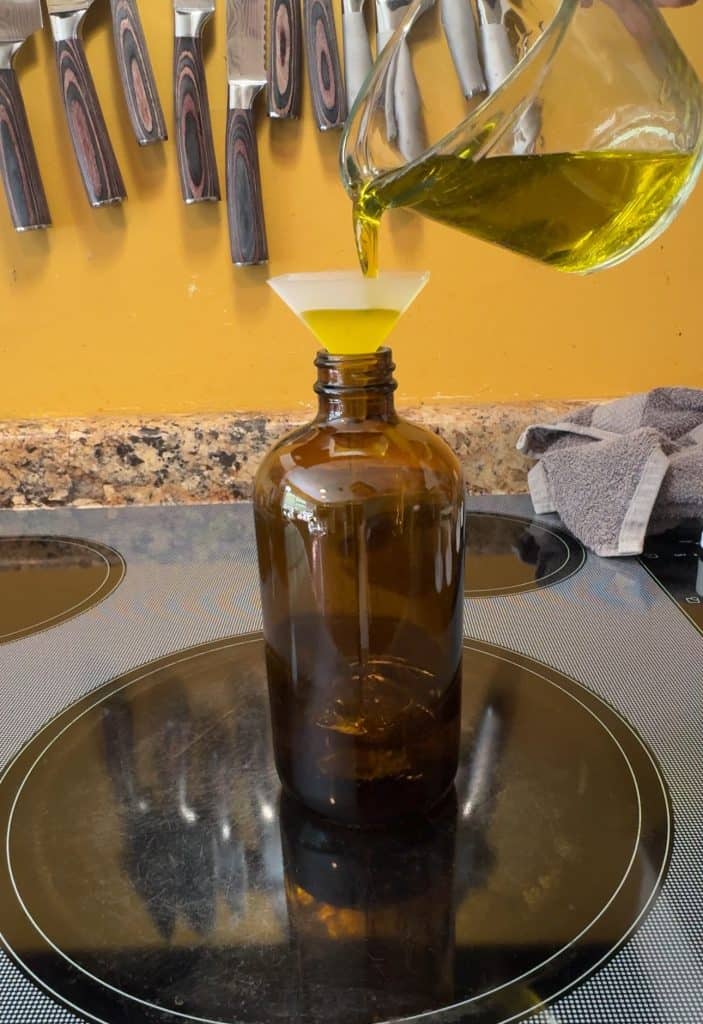
Pour in the Olive Oil
Next, add 1/2 cup of olive oil to the spray bottle. Olive oil is what gives this natural homemade polish its conditioning and polishing properties. It helps enhance the wood shine while adding moisture back to dry-looking wood surfaces.
Many people use cheap olive oil for DIY recipes like this since the quality of the oil doesn’t significantly affect the finished product. Save the good olive oil for your salad dressing and use the inexpensive bottle for your natural furniture polish recipe.
Add Your Favorite Essential Oils
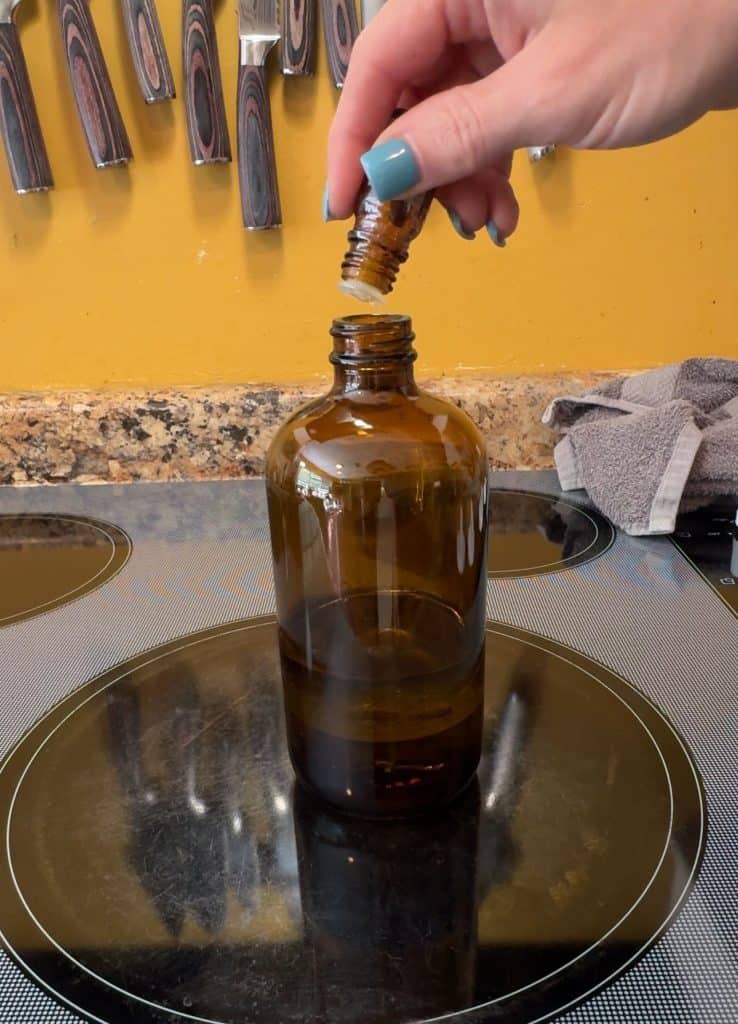
Add 15 to 20 drops of your favorite essential oils. Lemon essential oil and orange essential oil are especially popular choices because they leave behind a fresh, clean scent that pairs well with wooden furniture.
Using essential oils allows you to avoid the synthetic fragrances commonly found in commercial furniture polish sprays. You can also customize the scent based on your personal preference. Sweet birch, cedarwood, pine, and lavender are all great options.
Secure the Lid and Shake Well
Once all of the ingredients have been added, place the lid on the spray bottle and tighten it securely. Shake well to combine everything.
Because oil and vinegar naturally separate, this mixture won’t stay blended permanently. That’s completely normal. Simply shake the bottle before each use to redistribute the ingredients throughout the polish.
Store Until Ready to Use
Store your homemade wood polish in a cool, dark place between uses. A kitchen cabinet away from direct sunlight works well.
Since this recipe uses natural ingredients and contains no preservatives, it’s best to make small batches as needed. Fortunately, this simple recipe only takes a few minutes to put together whenever you need more.
Apply to Wooden Furniture
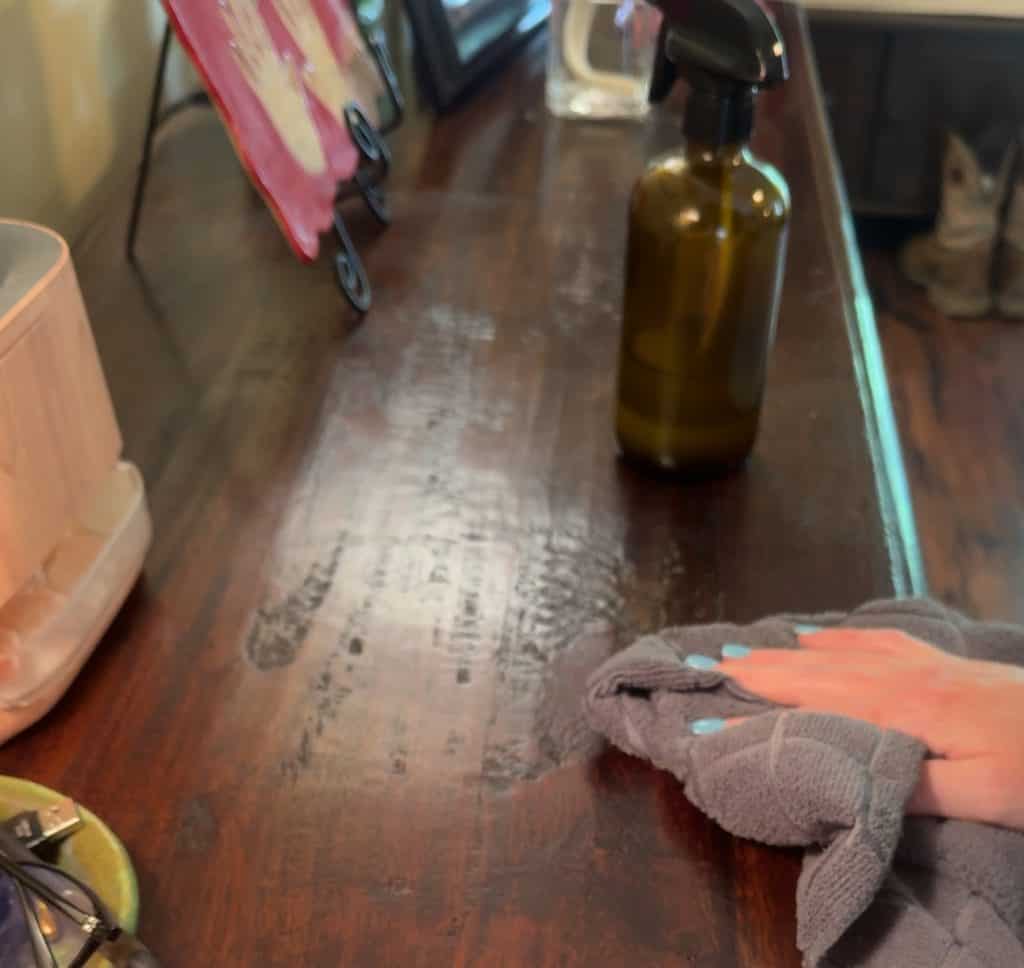
When you’re ready to use your DIY furniture polish, shake the bottle well and spray a small amount onto a microfiber cloth, soft cloth, or clean rag. Avoid spraying directly onto delicate surfaces whenever possible.
Wipe the wood’s surface using a circular motion while following the direction of the grain. This helps distribute the polish evenly across the entire piece while bringing out the natural beauty of the wood.
Buff for a Natural Shine
After applying the polish, use a clean dry cloth to buff the surface. This final step helps remove any excess oil and leaves behind a beautiful natural wood shine.
With regular use, this natural wood furniture polish can help keep your wooden furniture looking clean, polished, and well-maintained without the toxic chemicals, aerosol fumes, or unnecessary additives often found in commercial products.
Oils Commonly Used in Homemade Furniture Polish
There are many types of oil used in homemade wood polish recipes. While this original recipe uses olive oil, other options include:
- Jojoba oil
- Coconut oil
- Walnut oil
- Mineral oil
- Vegetable oil
- Tung oil
Many people choose cheap olive oil for DIY recipes, while others prefer good olive oil or jojoba oil because of their long shelf life.
Tips for Best Results
- Always test on an inconspicuous area first.
- Store in a dark place when not in use.
- Use a clean cloth each time you polish furniture.
- Buff with a dry cloth after application.
- Make small batches to keep the ingredients fresh.
Can This Be Used on Other Wood Items?
This homemade wood polish works well on many sealed wood surfaces throughout the home. You can use it on:
- Wooden furniture
- Kitchen cabinets
- Dining tables
- Shelving
- Decorative wood pieces
Avoid using this polish on unfinished wood unless you test it first in an inconspicuous area.
Wooden cutting boards are typically better maintained with food-safe oils such as mineral oil rather than vinegar-based furniture polishes. Learn how to make your own wood cutting board butter HERE.
Frequently Asked Questions
Is this natural wood furniture polish safe?
This natural solution contains natural ingredients and avoids many of the harsh chemicals found in commercial furniture polishes. However, always test on a small hidden area first.
Can I substitute apple cider vinegar?
Yes. Apple cider vinegar can be used, but distilled white vinegar is generally preferred because it has a milder color and scent.
Can I use lemon juice instead of essential oils?
Some DIY recipes use one part lemon juice combined with oil, but lemon essential oil tends to provide a longer-lasting scent without adding extra moisture.
Why not just buy commercial furniture polish?
Many commercial products contain synthetic fragrances, aerosol fumes, and ingredients designed to create temporary shine. Making your own furniture polish allows you to know exactly what is being applied to your wood surface.
Can I use this on hardwood floors?
I do not recommend using this recipe on hardwood floors without checking your flooring manufacturer’s care instructions first.
How long does homemade furniture polish last?
When stored in a dark place with a tight-fitting lid, this homemade wood polish can last for several months.
Final Thoughts
If you’re looking for a natural homemade furniture polish recipe that is affordable, effective, and easy to make, this DIY wood polish recipe is worth trying. Using distilled white vinegar, olive oil, and essential oils, you can create your own homemade furniture polish in just minutes. It’s a simple polish that helps clean wood, improve wood shine, and reduce your dependence on commercial products filled with unnecessary ingredients.
Whether you’re trying to avoid toxic chemicals, reduce household expenses, or simply enjoy making homemade cleaning products, this natural wood furniture polish is a great option for keeping your wooden furniture looking its best.
Natural DIY Wood Cleaner and Polish
Equipment
- Small funnel (optional)
- Measuring cup
- Microfiber cloth or soft cloth
Materials
- 1/2 cup distilled white vinegar
- 1/2 cup olive oil
- 15-20 drops essential oil lemon, orange, lavender, or your favorite scent
Instructions
- Pour the distilled white vinegar into an 8-ounce glass spray bottle.
- Add the olive oil.
- Add 15–20 drops of your chosen essential oil.
- Secure the lid and shake well to combine.
- Shake before each use, as the oil and vinegar will naturally separate.
- Spray a small amount onto a microfiber cloth or soft cloth.
- Wipe the wood surface in the direction of the grain.
- Buff with a clean, dry cloth to bring out the natural shine.
Notes
Store in a cool, dark place.
Best used on sealed wooden furniture, cabinets, and other finished wood surfaces.
Avoid using on unfinished wood without testing first.